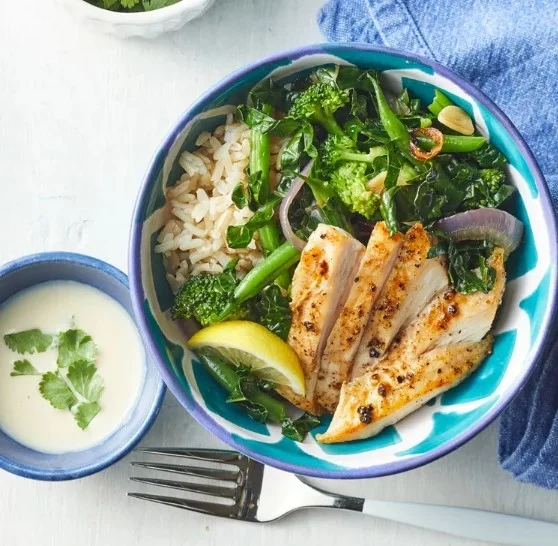
1.Green Veggie Bowl with Chicken & Lemon-Tahini Dressing
For this healthy 30-minute dinner, treat your veggies like pasta and cook until al dente, or just done. If you have a little extra time, double or triple the lemon-tahini dressing and use it to quickly dress a salad or as a sauce for steak or shrimp.
Ingredients
¼ cup tahini
¼ cup cold water plus 2 tablespoons, divided
¼ cup lemon juice
½ teaspoon minced garlic plus 2 sliced garlic cloves, divided
¼ teaspoon ground cumin
½ teaspoon kosher salt, divided
1 cup green beans
1 small broccoli crown
4 (4 ounce) chicken cutlets, trimmed
¼ teaspoon ground pepper
2 tablespoons extra-virgin olive oil, divided
½ large red onion, sliced
4 cups thinly sliced kale
2 cups cooked brown rice
¼ cup chopped fresh cilantro
Directions
Whisk tahini and 1/4 cup water in a small bowl until smooth. Add lemon juice, minced garlic, cumin and 1/4 teaspoon salt and whisk to combine. Set aside.
Trim green beans and cut in half. Break broccoli into florets. Measure 1 cup (reserve the rest for another use).
Season chicken with the remaining 1/4 teaspoon salt and pepper. Heat 1 tablespoon oil in a large cast-iron skillet over medium heat. Add the chicken and cook until an instant-read thermometer registers 160 degrees F, 3 to 5 minutes per side. Transfer to a clean cutting board and tent with foil to keep warm.
Wipe out the pan and add the remaining 1 tablespoon oil. Add onion and cook, stirring occasionally, for 2 minutes. Add sliced garlic and cook for 30 seconds, then add the broccoli and green beans. Cook, stirring occasionally, for 2 minutes. Stir in kale and add the remaining 2 tablespoons water. Cover and steam until the vegetables are tender-crisp, 1 to 2 minutes.
Slice the chicken.
To serve, divide rice and the vegetables among 4 bowls and top with the chicken. Drizzle with the reserved dressing and sprinkle with cilantro.
Nutrition Facts (per serving)
452
Calories
18g
Fat
42g
Carbs
35g
Protein
2.Chipotle Chicken Burrito Bowl with Cauliflower Rice
This easy-to-make and meal-prep burrito bowl is even better than takeout! You’ll never miss the carbs in this protein-packed, super-flavorful meal that replaces the cilantro-lime rice with cauliflower rice. We love this with chicken but it would be just as delicious with shrimp.
Ingredients
4 cups cauliflower florets
3 tablespoons extra-virgin olive oil, divided
½ teaspoon salt, divided
1 pound skinless, boneless chicken breasts
1 tablespoon finely chopped chipotle peppers in adobo sauce
½ teaspoon garlic powder
½ teaspoon ground cumin
2 cups shredded romaine lettuce
1 cup canned pinto beans, rinsed
1 ripe avocado, diced
¼ cup pico de gallo or fresh salsa
¼ cup shredded Cheddar or Monterey Jack cheese
Lime wedges for serving
Directions
Pulse cauliflower in a food processor until chopped into rice-size pieces. Heat 2 tablespoons oil in a large skillet over medium-high heat. Add the cauliflower and 1/4 teaspoon salt. Cook, stirring occasionally, until the cauliflower is softened, about 5 minutes. Cover and keep warm.
Position a rack in upper third of oven; preheat broiler to high. Coat a large rimmed baking sheet with cooking spray.
Season chicken with the remaining 1/4 teaspoon salt. Place on the prepared baking sheet and broil for 9 minutes.
Meanwhile, combine the remaining 1 tablespoon oil, chipotles, garlic powder and cumin in a small bowl.
Turn the chicken over, brush with the chipotle glaze and continue broiling until an instant-read thermometer inserted in the thickest part registers 165 degrees F, 8 to 10 minutes more. Transfer to a clean cutting board and chop into bite-size pieces.
Assemble each bowl with 1/2 cup each cauliflower rice, chicken and lettuce, 1/4 cup beans, 1/4 avocado and 1 tablespoon each pico de gallo (or salsa) and cheese. Serve with a lime wedge.
Nutrition Facts (per serving)
431
Calories
24g
Fat
22g
Carbs
34g
Protein
3.Spicy Slaw Bowls with Shrimp & Edamame
The quick 10-minute Spicy Cabbage Slaw serves as the low-carb base in this veggie-packed lunch recipe. Topped with high-protein edamame and shrimp, this satisfying lunch will help you power through the afternoon.
Ingredients
Spicy cabbage slaw
2 cups frozen shelled edamame, thawed
1 medium avocado, diced
½ medium lime, juiced
12 ounces peeled cooked shrimp
Directions
Prepare Spicy Cabbage Slaw. Add edamame; toss and set aside.
Toss avocado with lime juice in a small bowl.
Divide the slaw mixture among 4 containers. Top each with 1/4 of the shrimp (about 3 ounces) and 1/4 of the avocado. Cover and refrigerate until ready to eat.
To make ahead
Keep cabbage mixture and dressing for the Spicy Cabbage Slaw separate and wait to combine until ready to eat. If using precooked frozen shrimp, wait to defrost the shrimp until you’re ready to eat.
Nutrition Facts (per serving)
364
Calories
19g
Fat
20g
Carbs
28g
Protein
4. Meal-Prep Roasted Vegetable Bowls with Pesto
Your co-workers will be jealous when you pull out this healthy lunch of roasted veggies and brown rice. Put together 4 lunches when you have time and you will have packable lunches (or ready-to-eat dinners) for several days–just grab a container on your way out the door in the morning.
Ingredients
3 tablespoons extra-virgin olive oil, divided
½ teaspoon garlic powder
¼ teaspoon salt
¼ teaspoon ground pepper
4 cups broccoli florets
2 medium red bell peppers, quartered
1 cup sliced red onion
3 cups cooked brown rice
1 (15 ounce) can chickpeas, rinsed
4 tablespoons prepared pesto
Directions
Preheat oven to 450 degrees F.
Whisk 2 tablespoons oil, garlic powder, salt and pepper together in a large bowl. Add broccoli, peppers and onion; toss to coat. Transfer to a large rimmed baking sheet and roast, stirring once, until the vegetables are tender, about 20 minutes. Chop the peppers when cool enough to handle.
Stir the remaining 1 tablespoon oil into rice. Place about 3/4 cup of the rice in each of four 2-cup microwave-safe, lidded containers. Divide chickpeas and the roasted vegetables among the bowls. Top each with 1 tablespoon pesto.
To reheat: Microwave each container on High until heated through, 1 to 2 minutes.
Tips
To make ahead: Prepare through Step 3 and refrigerate for up to 4 days.
Nutrition Facts (per serving)
484
Calories
21g
Fat
64g
Carbs
12g
Protein
5.Creamy Blueberry-Pecan Overnight Oatmeal
These overnight oats with Greek yogurt, blueberries and pecans are an easy, on-the-go-breakfast. If desired, reheat the oatmeal before adding the toppings.
Ingredients
½ cup old-fashioned rolled oats
½ cup water
Pinch of salt
½ cup blueberries, fresh or frozen, thawed
2 tablespoons nonfat plain Greek yogurt
1 tablespoon toasted chopped pecans
2 teaspoons pure maple syrup
Directions
Combine oats, water and salt in a jar or bowl. Cover and refrigerate overnight. In the morning, heat if desired, and top with blueberries, yogurt, pecans and syrup.
Tips
People with celiac disease or gluten-sensitivity should use oats that are labeled “gluten-free,” as oats are often cross-contaminated with wheat and barley.
Your immune system is your body’s line of protection against bacteria, viruses, and other dangerous diseases. Best Ways To Boost Your Immune System Naturally is working at its best is more crucial than ever in the fast-paced world of today. Thankfully, there are numerous natural approaches to strengthen it. Whether by natural supplementation, dietary adjustments, or lifestyle changes, improving your immunity can help you avoid disease and maintain your health. We’ll go over the greatest natural immune system boosters in this extensive guide, covering everything from easy daily routines to the foods and nutrients you should include in your diet. Now let’s get started!
Why Is Having a Robust Immune System Vital?
Best Ways To Boost Your Immune System Naturally and Strong immunity is essential for warding off illnesses and infections. It serves as your body’s first line of defense, keeping infections out of your system and forcing your immune system to work extra hard to get rid of them if they do manage to get past it. Frequent infections, sluggish recovery from illnesses, and general poor health might result from a compromised immune system. For this reason, keeping your immune system in top shape is crucial.
Eat a Balanced, Nutrient-Rich Diet
What you eat plays a major role in your immune function. A diet that’s rich in vitamins, minerals, and antioxidants helps your body fight off harmful invaders. Focus on whole foods, including:
Fruits and Vegetables
These are packed with vitamins and antioxidants that are key to supporting immune function. Vitamin C, found in oranges, lemons, bell peppers, and leafy greens, is particularly beneficial. Vitamin A, found in carrots and sweet potatoes, also plays a vital role in maintaining a strong immune system.
Lean Proteins
Proteins are the building blocks of your cells, including immune cells. Incorporate lean sources of protein such as chicken, turkey, tofu, beans, and lentils into your diet.
Healthy Fats
Healthy fats like those found in olive oil, avocados, and nuts have anti-inflammatory properties that can help strengthen your immune response.
Probiotic-Rich Foods
Probiotics, the good bacteria found in fermented foods like yogurt, kimchi, and sauerkraut, can improve gut health. Since much of the immune system is located in the gut, maintaining a healthy microbiome is key to strong immunity.
Stay Hydrated
Drinking plenty of water helps your body flush out toxins and keeps your cells functioning properly. Hydration supports the production of lymph, which carries white blood cells and other immune system components. Aim for at least 8 glasses of water a day.
Get Enough Sleep
Immune system health depends on sleep. Your body regenerates and repairs itself when you sleep, which includes enhancing immune function. Research indicates that those who experience sleep deprivation are at an increased risk of contracting a virus. Aim for seven to nine hours of good sleep every night. Avoid using electronics right before bed, maintain a cool, dark room, and create a consistent sleep regimen to enhance your sleep hygiene.
Exercise Regularly
Frequent exercise strengthens your immune system and improves your general health. Mild exercise improves circulation, which facilitates the body’s immune cells’ more effective movement throughout it. Exercises like swimming, jogging, yoga, and brisk walking are excellent choices. Take care not to overdo it; prolonged, high-intensity exercise without adequate recuperation can actually impair immunity.
Manage Stress Levels
Your immune system may be negatively impacted by prolonged stress, leaving you more vulnerable to disease. Cortisol, a hormone that suppresses immunological function if high over prolonged periods of time, is released in response to stress. Your immune response can be greatly enhanced by including stress-relieving activities like journaling, deep breathing techniques, meditation, and time spent in nature.
Include Immune-Boosting Supplements
While it’s always best to get your nutrients from food, supplements can fill in the gaps, especially if you have a deficiency. Some of the most popular immune-boosting supplements include:
Vitamin C: Known for its immune-boosting properties, vitamin C helps stimulate the production of white blood cells.
Vitamin D: This vitamin plays a crucial role in immune function. Many people have low levels of vitamin D, especially in the winter months, so supplementation may be necessary.
Zinc: This mineral is essential for the immune system to function properly. Zinc deficiency can weaken your immune response, making supplementation helpful, particularly during cold and flu season.
Elderberry: Known for its antiviral properties, elderberry extract is often used as a natural remedy to reduce the severity of colds and flu.
Prioritize Gut Health
Your gut contains a sizable amount of your immune system, as was previously explained. Maintaining the health of your gut will guarantee optimal performance of your immune system. Consider including prebiotics in your diet in addition to foods high in probiotics. One kind of fiber that helps the good bacteria in your stomach grow is called prebiotics. Prebiotic-rich foods include onions, garlic, bananas, and asparagus.
Avoid Smoking and Excessive Alcohol
Smoking and excessive alcohol use are two things that can impair immunity. While alcohol can deplete vital nutrients and weaken the body’s defenses against infections, smoking damages the lungs and makes it more difficult for the body to fight respiratory infections. One of the best things you can do for your immune system is to stop smoking. In a similar vein, restrict your alcohol consumption to one drink for ladies and two for men every day.
Maintain a Healthy Weight
There is evidence that obesity impairs immunological function. Overweight can impair the body’s defenses against infections and can cause long-term inflammation, both of which can erode the immune system over time. A balanced diet and regular exercise are essential for maintaining a healthy weight, which will boost your immune system.
Stay Socially Connected
Keeping up solid social ties can lower stress and enhance general wellbeing, both of which boost immune system function. Maintaining relationships with friends, family, and the community is crucial since loneliness and social isolation can have a detrimental impact on immune system performance.
Practice Good Hygiene
Maintaining proper cleanliness is one of the simplest strategies to strengthen your immune system. Germs can be stopped from spreading by regularly washing your hands with soap and water, especially before eating or touching your face. You can also stay healthy by maintaining a clean living environment and limiting your contact with sick people.
Conclusion
Adopting a holistic approach to health is key to naturally boosting your immune system. You may fortify your body’s defenses by emphasizing a nutrient-rich diet, drinking plenty of water, getting enough sleep, exercising frequently, controlling your stress, and abstaining from dangerous habits like smoking and binge drinking. For a comprehensive approach to strengthening your immune system, take into account supplements, give your gut health first priority, and keep up your social life.
Making gradual but steady progress toward these practices will boost your immunity and enhance your general health.
When starting their weight-loss journey, many people underestimate the role of nutrition and forget to ensure that they consume adequate vitamins and minerals during meals. Smoothies are a great option to help you get proper nutrition while helping you achieve your weight-loss goals. Not only are they nutrient-dense, but smoothies usually contain ingredients that are essential for promoting weight loss.
Why are Smoothies a Great Addition to Weight-Loss-Friendly Diets?
Smoothies are often a top choice in many diets because they’re a convenient way to increase nutrient intake and enhance bodily functions that aid weight loss.
In addition to being versatile and usually easy and quick to prepare, smoothies also offer various other health benefits. These may include:
Being nutrient-dense and low in calories: Smoothies are packed with fruits and vegetables that provide essential nutrients without adding too many calories. This makes smoothies a great option for people who need to reduce their calorie intake to lose weight.
A high fiber content: The fruits and vegetables used to make smoothies are usually high in fiber. This is an important nutrient that aids digestion and satiety, which can help you avoid overeating and snacking on high-calorie foods.
Aiding hydration: Some smoothies are made with ingredients that have a high water content — like cucumbers or watermelons. Liquids, like coconut water, are also used often. These ingredients can contribute to adequate hydration, which can help enhance the metabolism and promote weight loss.
Helping to curb cravings: Smoothies contain naturally sweet ingredients that can help curb cravings for sugary snacks. This can help reduce your calorie intake by preventing unnecessary snacking.
1. Protein-packed strawberry and banana smoothie
Ingredients
1 cup fresh strawberries, hulled
1 ripe banana, peeled and sliced
1 scoop (approximately 30 g) of your preferred vanilla protein powder
1 cup unsweetened almond milk (or any milk of your choice)
½ cup Greek yogurt
1 tablespoon chia seeds
Ice cubes (optional, for a chilled smoothie)
1 teaspoon honey or maple syrup (optional, for added sweetness)
Method
Wash the strawberries.
In a blender, combine the strawberries, banana, protein powder, almond milk, Greek yogurt, and chia seeds. Add ice cubes if you prefer a colder smoothie, then blend well.
Taste the smoothie. If you prefer it sweeter, add honey or maple syrup, then blend again until smooth.
Pour the smoothie into a glass. You can garnish with a few slices of strawberry or banana on top for a decorative touch.
This smoothie is best enjoyed fresh, but you can store it in the refrigerator for up to 24 hours.
Nutritional Information (per serving):
Calories: ~400 kcal
Protein: ~12 g
Fat: ~20 g
Carbohydrates: ~45 g
Fiber: ~10 g
2. Green detox smoothie
Ingredients
1 cup fresh spinach leaves (packed)
½ cup kale leaves, stems removed
½ green apple, cored and sliced
½ cucumber, peeled and sliced
½ ripe avocado
Juice of 1 lemon
1 tablespoon fresh ginger, grated
1 cup coconut water (or filtered water)
A few mint leaves, for added freshness
Ice cubes (optional)
Method
Rinse the spinach and kale leaves thoroughly. Scoop out the avocado flesh.
Place the spinach, kale, apple, cucumber, avocado, lemon juice, ginger, and mint leaves in a blender. Add the coconut water (or filtered water) and a few ice cubes if you prefer a chilled smoothie.
Blend on high speed until everything is thoroughly combined, and the smoothie reaches your desired consistency. If it’s too thick, add a little more water.
Give the smoothie a taste. If you need more sweetness, you can add a small amount of honey or agave syrup before mixing well.
Pour the smoothie into a glass and enjoy immediately for the best flavor and nutrient content.
Nutritional Information (per serving):
Calories: ~400 kcal
Protein: ~12 g
Fat: ~20 g
Carbohydrates: ~45 g
Fiber: ~10 g
3. Tropical turmeric smoothie
Ingredients
1 cup fresh pineapple chunks
1 ripe mango, peeled and diced
½ frozen banana, peeled and sliced
½ teaspoon turmeric powder
A pinch of black pepper, to enhance turmeric absorption
½ cup coconut milk, for creaminess and tropical flavor
Juice of ½ lime
1 tablespoon honey or agave syrup (optional)
Ice cubes (optional, for a chilled smoothie)
1 tablespoon chia seeds (optional)
Method
In a blender, combine the pineapple, mango, banana, turmeric powder, and a pinch of black pepper. Add the coconut milk, lime juice, and honey or agave syrup (if using).
Add ice cubes if you’re using them, and blend everything until smooth and creamy. If the smoothie is too thick, you can add a little more coconut milk or water to reach your preferred consistency.
If using chia seeds, add them after blending and give the smoothie a quick stir. This will add texture and additional nutrients to your smoothie.
Pour the smoothie into a glass. You can garnish with a small wedge of pineapple or a sprinkle of turmeric on top for a decorative touch.
This smoothie is best enjoyed fresh, but can be stored in the refrigerator for up to 24 hours.
Nutritional Information (per serving):
Calories: ~400 kcal
Protein: ~12 g
Fat: ~20 g
Carbohydrates: ~45 g
Fiber: ~10 g
4. Almond berry smoothie
Ingredients
1 cup mixed berries (fresh or frozen)
¼ cup raw almonds (dry or soaked)
1 banana, peeled and sliced
1 tablespoon almond butter
1 cup unsweetened almond milk (or any other milk of your choice)
1 teaspoon honey or maple syrup (optional, for extra sweetness)
A pinch of cinnamon
Ice cubes (optional, for a chilled smoothie)
Method
If you have soaked almonds, drain and rinse them. Prepare the berries. If you’re using fresh berries, consider freezing them beforehand for a colder smoothie.
In a blender, combine the mixed berries, almonds, banana, almond butter, and almond milk. Add a pinch of cinnamon and honey or maple syrup (if using).
Blend on high until the mixture is smooth. If the smoothie is too thick, you can add more almond milk to achieve your desired consistency. For a colder smoothie, add ice cubes and blend until smooth.
Give the smoothie a quick taste. Adjust the sweetness or cinnamon according to your preference.
Pour the smoothie into your favorite glass. You can garnish with a few whole berries or a sprinkle of ground almonds on top for extra flair.
This smoothie is best when enjoyed fresh, but can also be stored in the refrigerator for up to 24 hours.
Nutritional Information (per serving):
Calories: ~400 kcal
Protein: ~12 g
Fat: ~20 g
Carbohydrates: ~45 g
Fiber: ~10 g
5. Chia seed, banana, and peanut butter smoothie
Ingredients:
1 large ripe banana, peeled and sliced
2 tablespoons chia seeds
2 tablespoons natural peanut butter (unsweetened and unsalted)
1 cup unsweetened almond milk (or any milk of your choice)
½ teaspoon vanilla extract
1 tablespoon honey or maple syrup (optional, for sweetness)
Ice cubes (optional, for a chilled smoothie)
Method:
If possible, soak the chia seeds in the almond milk for about 20 minutes before making the smoothie. This allows the chia seeds to swell and become gel-like, which will give your smoothie a creamier texture.
In a blender, combine the soaked chia seeds and almond milk, sliced banana, peanut butter, and vanilla extract. If you’re using honey or maple syrup, add it to the mixture.
Add ice cubes if you prefer a colder smoothie. Blend everything until smooth and creamy. If the smoothie is too thick, add a bit more almond milk and stir well.
Taste the smoothie and adjust the sweetness. You can also add more peanut butter if you like a stronger flavor.
Pour the smoothie into a glass and garnish with a sprinkle of chia seeds or a few banana slices on top.
Serve right away.
Nutritional Information (per serving):
Calories: ~400 kcal
Protein: ~12 g
Fat: ~20 g
Carbohydrates: ~45 g
Fiber: ~10 g
Tips for Making Weight-Loss-Friendly Smoothies
Add protein
Protein is a crucial ingredient in weight-loss-friendly smoothies. It increases satiety and keeps you feeling fuller for longer, which can help reduce overall calorie intake.
Protein helps to build and repair muscles, especially if you’re exercising regularly as part of your weight-loss plan. Having more muscle also means you’ll burn more calories throughout the day.
You can add protein to your smoothies in various forms — such as with protein powder, Greek yogurt, tofu, or different kinds of nut butter.
These ingredients add essential nutrients and enhance the texture and flavor of your smoothie.
Top Tip: Choosing the Right Protein Powder
When considering a protein powder for your smoothies, it’s often best to go with a ‘neutral’ flavor like vanilla.
Other variants — like chocolate protein powder — may change the taste too much and take away from the original recipe.
Experiment with the consistency
If you prefer a thicker, more filling smoothie, consider adding ingredients like avocado, banana, or chia seeds.
Not only do these ingredients improve the texture, but they also add essential vitamins and nutrients to your smoothie that can aid weight loss.
You can also use the thicker consistency to create a smoothie bowl and top it with fresh fruits for added flavor.
For a lighter smoothie, use more liquid — such as water, almond milk, or coconut water. Plant milk and coconut water can also add more nutrients without significantly increasing calories.
Prep in advance
Planning and prepping your smoothie ingredients in advance can save time and make it easier to stick to your weight-loss plan.
You can pre-portion fruits, vegetables, and protein sources and store them in the fridge or freezer. This way, you can quickly blend up a nutritious smoothie without needing to spend a lot of time preparing the ingredients.
Prepping in advance also ensures that you have healthy options readily available, reducing the temptation to opt for speedy high-calorie alternatives that can contribute to weight gain.
Incorporate greens and superfoods
Greens — like spinach, kale, and Swiss chard — are low in calories but high in fiber and essential nutrients, making them perfect for a healthy smoothie recipe.
They blend well with fruits and other ingredients, adding a nutrient boost without overpowering the taste.
You can also consider adding superfoods — such as berries, flaxseeds, spirulina, or acai powder — to your smoothie recipes.
These ingredients are nutrient-dense and offer various health benefits that can aid your weight-loss efforts.
An Unforgettable Story of Music, Friendship, and Legacy of Phil Lesh Passed away at 84
Phil Lesh’s influential music career spanned decades, impacting various offshoots after Jerry Garcia’s death in 1995. Phil Lesh, the Grateful Dead’s iconic sound, passed away on Friday at the age of 84. Known for his influential work with the band and for contributing to various Grateful Dead offshoots after guitarist Jerry Garcia’s passing in 1995, Lesh’s musical legacy spanned decades.
Phil Lesh performs with The Dead, at the Forum in the Inglewood section of Los Angeles, on May 9, 2009. Lesh, a founding member of the Grateful Dead, died Friday, Oct. 25, 2024, at age 84. The announcement was shared on his official Instagram page: “Phil Lesh, bassist and founding member of The Grateful Dead, passed peacefully this morning. He was surrounded by his family and full of love. Phil brought immense joy to everyone around him and leaves behind a legacy of music and love. We request that you respect the Lesh family’s privacy at this time.”
Phil Lesh’s music legacy
Lesh initially studied under composer Luciano Berio and played with minimalist music pioneer Steve Reich. His path took an unexpected turn in 1965 when his friend, guitarist Jerry Garcia, invited him to play bass for a performance by the Warlocks, a group that would soon transform into the Grateful Dead.
Promoted
Although Lesh had never formally studied the bass, he embraced the opportunity. Reflecting on that first gig, he recalled in the 2002 book A Long Strange Trip, “I was so excited that I didn’t have to think about it…but I knew something great was happening, something bigger than everybody, bigger than me for sure.” Lesh’s unique approach helped define the Grateful Dead’s sound, combining improvisation with a level of sophistication rarely seen in rock music. Alongside peers like Jefferson Airplane’s Jack Casady and Cream’s Jack Bruce, Lesh helped reimagine the role of the bassist in rock bands, playing a pivotal role as the Dead moved from covering bluegrass, blues, and country to a more expansive, free-form style. Nick Paumgarten, writing for The New Yorker in 2012 said, “What makes the Dead’s sound so distinct from any other kind of rock and roll may be Lesh’s bass.” Paumgarten observed that Lesh approached the bass with an aversion to repetition, describing how “he did not like to repeat things, which is rare for an instrument usually charged with keeping time. He played around the root and the beat, often skewing the pocket, skipping the one, holding off on the changes, bubbling up around it, or playing a melodic counterpoint.”
Phil Lesh, founding member of Grateful Dead and influential bassist, dies at 84
Phil Lesh was one of the longest surviving members of the band that came to define the acid rock sound emanating from San Francisco in the 1960s. Phil Lesh, a classically trained violinist and jazz trumpeter who found his true calling reinventing the role of rock bass guitar as a founding member of the Grateful Dead, died Friday at age 84. Phil Lesh performs with The Dead, at the Forum in the Inglewood section of Los Angeles, on May 9, 2009. Lesh, a founding member of the Grateful Dead, died Friday at age 84. Lesh’s death was announced on his Instagram account. Lesh was the oldest and one of the longest surviving members of the band that came to define the acid rock sound emanating from San Francisco in the 1960s.“Phil Lesh, bassist and founding member of The Grateful Dead, passed peacefully this morning. He was surrounded by his family and full of love. Phil brought immense joy to everyone around him and leaves behind a legacy of music and love,” the Instagram statement reads in part. The statement did not cite a specific cause of death and attempts to reach representatives for additional details were not immediately successful. Lesh had previously survived bouts of prostate cancer, bladder cancer and a 1998 liver transplant necessitated by the debilitating effects of a hepatitis C infection and years of heavy drinking. Although he kept a relatively low public profile, rarely granting interviews or speaking to the audience, fans and fellow band members recognized Lesh as a critical member of the Grateful Dead whose thundering lines on the six-string electric bass provided a brilliant counterpoint to lead guitarist Jerry Garcia’s soaring solos and anchored the band’s famous marathon jams.
Phil Lesh and Friends was an American rock band formed and led by Phil Lesh, former bassist of the Grateful Dead
Phil & Friends is not a traditional group in that several different lineups of musicians have played under the name, including groups featuring members of Phish, the Black Crowes, and the Allman Brothers Band.
Music
The Phil & Friends concept takes the music of the Grateful Dead (and an ever-increasing number of other influences, including Bob Dylan, Traffic, The Beatles, Led Zeppelin, Warren Haynes‘ band Gov’t Mule, the Allman Brothers Band, etc.) and explores and interprets it in new ways. Through the period known as the Quintet years (see below), a Phil & Friends show was often focused on harder, faster rock than that which the Grateful Dead played, thanks in large part to Haynes’ and Jimmy Herring‘s talents at the Southern rock style. Lesh was fond of calling it “Dixieland-style rock”. However, all of the incarnations of Phil & Friends have followed a trend of “updating” the Grateful Dead’s body of work, and all have been adept at the long, exploratory jams that were a trademark of the Grateful Dead. Phil & Friends has been acclaimed for giving new life to the Grateful Dead’s material, bringing in new styles and innovations, while at the same time remaining loyal to the original music and the original fans. It is this melding of musical influences that has given them wide appeal not only among old Deadheads, but the modern-day fans of other jam bands as well.
Phil & Friends has continued the Grateful Dead’s tradition of allowing fans to record concerts, and trade these recordings freely. The Internet has been an invaluable source for these tapers to disseminate this music through various sources, including Archive.org and the BitTorrent file-sharing network. Phil has also embraced the Internet by providing free soundboard recordings of many concerts through his website, even providing high-resolution CD covers for fans to print. For his Summer 2006 tour, Phil partnered with Instant Live, a company that was able to provide soundboard CDs of a concert immediately upon its finishing, as well as make these recordings available for fans to download online, though this service was not free.
History
Original Phil Lesh and Friends
The first use of the Phil Lesh and Friends banner was on September 24, 1994, at the Berkeley Community Theatre. The band was an acoustic version of the Grateful Dead and featured members Phil Lesh, Jerry Garcia, Bob Weir and Vince Welnick. Grateful Dead drummers Bill Kreutzmann and Mickey Hart were not part of the band. After this gig the band name was put to rest until Phil formed a new band in 1998.
1998–2000 permutations
In 1998, Lesh played with a rotating cast of musicians under the Phil Lesh and Friends name, mostly at San Francisco’s The Fillmore. Bob Weir, Steve Kimock, Jeff Chimenti, Dave Ellis, Prairie Prince, Scott Amendola, Stan Franks, Gary Lambert, Bobby Strickland and Vince Welnick were among the musicians who participated in the gigs.
After these opening concerts and until October 1999, Phil kept the same “core” of himself and Kimock, and generally Molo as well, while regularly rotating in new musicians on guitar and keys (and sometimes additional instruments). Over this period, the lineups included:
This lineup released the only Phil Lesh and Friends studio album, There and Back Again, on Columbia Records in 2002. It included several new songs from Lesh and Robert Hunter, longtime Grateful Dead lyricist, as well as one recent favorite from Jerry Garcia and Hunter, and several original contributions from Haynes, Barraco/Mattson and Herring.
During the summer tour of 2001, the band performed a series of instrumental numbers composed by Lesh. The songs were inspired by the solar system. While they were never officially released on an album, they have come to be known as the Planet Jams. A bootleg compilation of these songs has been circulating since then.
Post Quintet Era
Ryan Adams started performing with the band in June 2005 after meeting Lesh at the Jammys,[7] followed by Chris Robinson in November/December 2005.
2006
During 2006, Phil Lesh and Friends consisted of a core of musicians including Lesh, Larry Campbell (guitar, violin, slide guitar, mandolin, and vocals), Joan Osborne (vocals), Rob Barraco (keyboards and vocals), and John Molo (drums). On the first half of the summer tour, they were joined by John Scofield (guitar), and on the second half, by Barry Sless (pedal steel) and, during the third quarter of the tour and generally for the second set, by Trey Anastasio. Saxophonist Greg Osby joined the group for various concerts, particularly toward the end of the tour, and guest artists including Page McConnell and Dickey Betts sat in for individual sets.
Concerts with Scofield had a jazzy, astringent quality. Anastasio contributed a strong rock lead guitar to the sets he played in, while Sless brought a softer, more lyrical quality. The relative lack of comment about these lineups compared to the earlier “Quintet” and later 2007-8 configuration suggests that they were not as popular with Lesh’s core fan base, but they gave unique and varied interpretations to some of the Grateful Dead’s classics along with numerous other songs. Furthermore, the fact that the entire tour was distributed online and later via Instant Live CDs, and a live DVD was made of an early concert at the Warfield (with Scofield and Osby), meant that the various configurations of the year’s lineup left a larger body of recorded work than many groups that worked together for years.
2007–2008
A new formation of Phil & Friends, including Lesh, Larry Campbell (guitar, mandolin, fiddle), Teresa Williams (vocals), Jackie Greene (vocals and guitar), Steve Molitz (keyboards), and John Molo (drums), debuted in September 2007 in Santa Barbara, California.
On February 4, 2008, Phil and Friends joined Grateful Dead guitarist Bob Weir and drummer Mickey Hart, along with Barry Sless and RatDog guitarist Mark Karan, for a concert called “Deadheads for Obama“, in support of Barack Obama‘s presidential campaign. The show was the first time that Weir, Hart, and Lesh had played together since 2004. Even more recently, the band performed the final shows at the Warfield Theatre in San Francisco. Bob Weir sat in for a run of five nights that included sets of the Grateful Dead’s first few albums.
In the fall of 2008, Phil Lesh and Friends toured the Eastern United States, including a run of 14 shows in 19 days, known as “Philathon”, at the Nokia Theatre Times Square in New York City. The final Phil Lesh and Friends performance until 2012 was on 12/31/08. Meanwhile, Phil had been touring with The Dead and Furthur.
2012
On Phil Lesh’s website, 3 dates at the 1stBank Center in Broomfield, Colorado, were scheduled for the February 16, 17, and 18. A twelve-date appearance at Lesh’s new club, Terrapin Crossroads, is set to commence on March 17, 2012, which many old members of the band returning to appear alongside Lesh, as well as a few new members.
On April 26 through April 29 the original Quintet returned, performing four sold-out shows at Terrapin Crossroads.
Phil Lesh and Friends featuring Warren Haynes, Jackie Greene, John Medeski and Joe Russo performed two shows on April 14 and 15 at Brooklyn Academy of Music.
Phil and Friends then played two shows at Central Park’s Rumsey Playfield on May 28 and 31. The incarnation of this band included Warren Haynes, John Scofield, John Medeski and Joe Russo.
2015–2016
Starting in January 2015, Phil Lesh and Friends celebrated the Grateful Dead’s 50th Anniversary by performing tribute concerts, recreating select concerts from the Grateful Dead’s 30-year career, at his restaurant Terrapin Crossroads, along with select Grateful Dead Recreational Tribute shows at The Capitol Theatre, in Port Chester, New York. These celebrations of the Grateful Dead’s 50th Anniversary continued into 2016
In 2015, Phil Lesh And Friends had to cancel two shows at Terrapin Crossroads on October 24–25, due to the bladder cancer diagnosis of Phil Lesh.
The following musicians have accompanied bassist and vocalist Phil Lesh with various lineups of Phil Lesh & Friends from 1999 to present day (with one performance in 1994). Note: This list is incomplete.
Understanding the weather of different cities can greatly influence lifestyle choices, travel plans, and even job opportunities. This blog explores the distinct weather patterns of five major U.S. cities: Houston, Denver, NYC, Dallas, and Las Vegas. Each city offers a unique climate, catering to diverse preferences and activities.
Houston Weather
Houston features a humid subtropical climate characterized by hot summers and mild winters. Summer temperatures often soar above 90°F, coupled with high humidity, making the heat feel even more intense. Winters are generally mild, with temperatures rarely dropping below freezing. Rainfall is plentiful, particularly in the spring, leading to lush landscapes but also the risk of flooding. The hurricane season, stretching from June to November, brings additional considerations for residents. While the heat can be oppressive, Houston’s vibrant culture and cuisine offer plenty of indoor activities during the hottest months. For those who relish warm weather, Houston is a paradise, but the intense summer heat can be a drawback.
Precautions:
Stay hydrated and avoid outdoor activities during peak heat hours. Be prepared for hurricane season with an emergency kit and evacuation plan. Conclusion: Ideal for those who enjoy warm weather but challenging during peak summer months.
Denver Weather
Denver boasts a semi-arid climate, providing a stark contrast to Houston’s humidity. Summers are warm, with average highs around 85°F, while winters are cold, often seeing significant snowfall due to its elevation in the Rocky Mountains. The city enjoys around 300 days of sunshine annually, making it an outdoor enthusiast’s dream.Precipitation is moderate, primarily falling in the summer, often in the form of brief thunderstorms. Denver’s high altitude means that temperatures can fluctuate drastically; a sunny winter day may warm to the 50s, while nighttime temperatures can plummet. For those who love skiing or hiking, Denver’s weather is ideal, offering both summer and winter recreational opportunities.
Precautions:
Dress in layers to adapt to rapid temperature changes. Stay aware of altitude sickness when engaging in outdoor activities. Conclusion: Perfect for outdoor enthusiasts and those who enjoy snow sports.
NYC Weather
New York City experiences a humid subtropical climate with continental influences, resulting in hot, humid summers and cold, snowy winters. Summer temperatures can reach into the 90s, while winter averages hover around 30°F. Precipitation is moderate and fairly consistent throughout the year, with winter snowstorms being a hallmark of the season. Each season brings its own charm; fall offers stunning foliage, and the winter holidays transform the city into a festive wonderland. However, harsh winter weather can disrupt transportation and daily life. NYC’s diverse climate appeals to those who appreciate seasonal changes and a bustling urban environment.
Precautions:
Prepare for winter by dressing in warm layers and having snow gear ready. Be cautious during summer heatwaves; find shade and stay hydrated. Conclusion: Diverse climate appeals to those who enjoy seasonal changes.
Dallas Weather
Dallas shares a humid subtropical climate with Houston, featuring extremely hot summers with temperatures often exceeding 100°F. Winters are generally mild and can see some colder spells but rarely snowfall. Rain is more common in spring and fall, with the risk of severe weather, including tornadoes, in the spring months. The intense summer heat can be daunting, but Dallas offers numerous indoor attractions and a vibrant nightlife to escape the heat. For sun-seekers, Dallas is an excellent option, but the summer extremes require preparation and hydration.
Precautions:Avoid outdoor activities during extreme heat; use sunscreen and stay hydrated. Stay informed about severe weather warnings during tornado season. Conclusion: Great for warm weather lovers, but be prepared for summer extremes.
Las Vegas Weather
Las Vegas is known for its desert climate, characterized by very hot summers and mild winters. Summer temperatures frequently exceed 100°F, creating a dry heat that can be uncomfortable. However, winter temperatures are quite pleasant, making it a year-round destination for outdoor activities. Rainfall is minimal, with most precipitation occurring in the winter months. The extreme summer heat can be a drawback, but for those who enjoy sunny, dry weather, Las Vegas is an enticing option. The city’s vibrant entertainment scene also provides ample indoor activities during peak summer.
Precautions:
Use sun protection and stay hydrated during summer months. Be cautious of dehydration; carry water during outdoor activities. Best suited for those who thrive in dry, warm conditions.
Conclusion
The weather in Houston, Denver, NYC, Dallas, and Las Vegas varies widely, influencing the lifestyle and activities available in each city. Whether you prefer the humid warmth of Houston, the snowy peaks of Denver, the seasonal changes in NYC, the summer heat of Dallas, or the dry conditions of Las Vegas, there’s a city that fits your weather preferences. Understanding these patterns can help you make informed decisions about where to live or visit, tailoring your experiences to your climatic comfort.
Your immune system is your body’s line of protection against bacteria, viruses, and other dangerous diseases. Making ensuring your immune system is working at its best is more crucial than ever in the fast-paced world of today. Thankfully, there are numerous natural approaches to strengthen it. Whether by natural supplementation, dietary adjustments, or lifestyle changes, improving your immunity can help you avoid disease and maintain your health. We’ll go over the best ways to boost your immune system naturally in this extensive guide, covering everything from easy daily routines to the foods and nutrients you should include in your diet. Now let’s get started!
Why Is Having a Robust Immune System Vital?
Strong immunity is essential for warding off illnesses and infections. It serves as your body’s first line of defense, keeping infections out of your system and forcing your immune system to work extra hard to get rid of them if they do manage to get past it. Frequent infections, sluggish recovery from illnesses, and general poor health might result from a compromised immune system. For this reason, keeping your immune system in top shape is crucial.
Eat a Balanced, Nutrient-Rich Diet
What you eat plays a major role in your immune function. A diet that’s rich in vitamins, minerals, and antioxidants helps your body fight off harmful invaders. Focus on whole foods, including:
Fruits and Vegetables
These are packed with vitamins and antioxidants that are key to supporting immune function. Vitamin C, found in oranges, lemons, bell peppers, and leafy greens, is particularly beneficial. Vitamin A, found in carrots and sweet potatoes, also plays a vital role in maintaining a strong immune system.
Lean Proteins
Proteins are the building blocks of your cells, including immune cells. Incorporate lean sources of protein such as chicken, turkey, tofu, beans, and lentils into your diet.
Healthy Fats
Healthy fats like those found in olive oil, avocados, and nuts have anti-inflammatory properties that can help strengthen your immune response.
Probiotic-Rich Foods
Probiotics, the good bacteria found in fermented foods like yogurt, kimchi, and sauerkraut, can improve gut health. Since much of the immune system is located in the gut, maintaining a healthy microbiome is key to strong immunity.
Stay Hydrated
Drinking plenty of water helps your body flush out toxins and keeps your cells functioning properly. Hydration supports the production of lymph, which carries white blood cells and other immune system components. Aim for at least 8 glasses of water a day.
Get Enough Sleep
Immune system health depends on sleep. Your body regenerates and repairs itself when you sleep, which includes enhancing immune function. Research indicates that those who experience sleep deprivation are at an increased risk of contracting a virus. Aim for seven to nine hours of good sleep every night. Avoid using electronics right before bed, maintain a cool, dark room, and create a consistent sleep regimen to enhance your sleep hygiene.
Exercise Regularly
Frequent exercise strengthens your immune system and improves your general health. Mild exercise improves circulation, which facilitates the body’s immune cells’ more effective movement throughout it. Exercises like swimming, jogging, yoga, and brisk walking are excellent choices. Take care not to overdo it; prolonged, high-intensity exercise without adequate recuperation can actually impair immunity.
Manage Stress Levels
Your immune system may be negatively impacted by prolonged stress, leaving you more vulnerable to disease. Cortisol, a hormone that suppresses immunological function if high over prolonged periods of time, is released in response to stress. Your immune response can be greatly enhanced by including stress-relieving activities like journaling, deep breathing techniques, meditation, and time spent in nature.
Include Immune-Boosting Supplements
While it’s always best to get your nutrients from food, supplements can fill in the gaps, especially if you have a deficiency. Some of the most popular immune-boosting supplements include:
Vitamin C: Known for its immune-boosting properties, vitamin C helps stimulate the production of white blood cells.
Vitamin D: This vitamin plays a crucial role in immune function. Many people have low levels of vitamin D, especially in the winter months, so supplementation may be necessary.
Zinc: This mineral is essential for the immune system to function properly. Zinc deficiency can weaken your immune response, making supplementation helpful, particularly during cold and flu season.
Elderberry: Known for its antiviral properties, elderberry extract is often used as a natural remedy to reduce the severity of colds and flu.
Prioritize Gut Health
Your gut contains a sizable amount of your immune system, as was previously explained. Maintaining the health of your gut will guarantee optimal performance of your immune system. Consider including prebiotics in your diet in addition to foods high in probiotics. One kind of fiber that helps the good bacteria in your stomach grow is called prebiotics. Prebiotic-rich foods include onions, garlic, bananas, and asparagus.
Avoid Smoking and Excessive Alcohol
Smoking and excessive alcohol use are two things that can impair immunity. While alcohol can deplete vital nutrients and weaken the body’s defenses against infections, smoking damages the lungs and makes it more difficult for the body to fight respiratory infections. One of the best things you can do for your immune system is to stop smoking. In a similar vein, restrict your alcohol consumption to one drink for ladies and two for men every day.
Maintain a Healthy Weight
There is evidence that obesity impairs immunological function. Overweight can impair the body’s defenses against infections and can cause long-term inflammation, both of which can erode the immune system over time. A balanced diet and regular exercise are essential for maintaining a healthy weight, which will boost your immune system.
Stay Socially Connected
Keeping up solid social ties can lower stress and enhance general wellbeing, both of which boost immune system function. Maintaining relationships with friends, family, and the community is crucial since loneliness and social isolation can have a detrimental impact on immune system performance.
Practice Good Hygiene
Maintaining proper cleanliness is one of the simplest strategies to strengthen your immune system. Germs can be stopped from spreading by regularly washing your hands with soap and water, especially before eating or touching your face. You can also stay healthy by maintaining a clean living environment and limiting your contact with sick people.
Conclusion
Adopting a holistic approach to health is key to naturally boosting your immune system. You may fortify your body’s defenses by emphasizing a nutrient-rich diet, drinking plenty of water, getting enough sleep, exercising frequently, controlling your stress, and abstaining from dangerous habits like smoking and binge drinking. For a comprehensive approach to strengthening your immune system, take into account supplements, give your gut health first priority, and keep up your social life.
Making gradual but steady progress toward these practices will boost your immunity and enhance your general health.
In recent years, more people are turning towards plant-based diets for ethical, environmental, and health reasons. For those looking to build muscle, this shift may raise a key question: “Can you gain muscle on a plant-based diet?” The answer is a resounding yes! With the right sources of plant-based proteins, you can effectively fuel muscle growth and meet your fitness goals.
Let’s dive into some of the best plant-based protein sources that can help you gain muscle.
Lentils: The Muscle-Building Powerhouse
Lentils are a staple in plant-based diets, and for good reason. These little legumes pack a powerful punch when it comes to protein, delivering around 18 grams of protein per cooked cup. Lentils are also rich in fiber, iron, and essential nutrients, making them an all-around muscle-building superstar.
Chickpeas: Versatile and Nutritious
Chickpeas, also known as garbanzo beans, are another great source of plant-based protein. With approximately 15 grams of protein per cooked cup, chickpeas provide a solid base for a variety of dishes. They can be used in salads, soups, or even roasted for a crunchy snack, adding versatility to your meal plan while supporting your muscle growth.
Quinoa: The Complete Protein Grain
Unlike most plant-based protein sources, quinoa is a complete protein, meaning it contains all nine essential amino acids your body needs for muscle repair and growth. With 8 grams of protein per cup, quinoa is a fantastic addition to any meal. Its high fiber content and essential nutrients like magnesium and iron further support your body’s recovery and strength-building efforts.
Tempeh: A Fermented Protein-Rich Food
Tempeh is a fermented soybean product that offers a whopping 21 grams of protein per 4-ounce serving. Its dense texture and nutty flavor make it a great meat substitute in many dishes. Additionally, because it’s fermented, tempeh promotes gut health, which can indirectly enhance nutrient absorption, benefiting your overall muscle-building process.
Edamame: Young Soybeans for Muscle Growth
Edamame, or young soybeans, are a protein-packed snack or meal addition. With 17 grams of protein per cup, edamame is not only a delicious, easy-to-prepare option but also a great source of fiber, vitamins, and minerals like iron and calcium, all of which contribute to muscle recovery and development.
Hemp Seeds: Small But Mighty
Don’t let their size fool you—hemp seeds are a powerhouse of protein, containing around 10 grams of protein per 3-tablespoon serving. They’re also rich in healthy omega-3 fatty acids, which can help reduce inflammation and aid in recovery after intense workouts. You can sprinkle hemp seeds on salads, oatmeal, or smoothies for an easy protein boost.
Chia Seeds: Protein with a Side of Omega-3s
Chia seeds may not be the first food you think of when it comes to muscle gain, but they’re an excellent source of protein, offering about 5 grams per ounce. They are also packed with omega-3 fatty acids, which are great for reducing post-workout inflammation. Simply add chia seeds to your smoothies, yogurt, or cereal for an extra nutrient hit.
Nutritional Yeast: A Cheesy, Protein-Rich Topping
Nutritional yeast is a unique and tasty way to add more protein to your diet. With about 8 grams of protein per 2 tablespoons, this cheesy-flavored ingredient can be sprinkled on pasta, popcorn, or vegetables. Plus, it’s a great source of B vitamins, which are crucial for energy metabolism and recovery.
Black Beans: A Protein-Packed Legume
Black beans provide roughly 15 grams of protein per cooked cup, making them another excellent option for plant-based muscle gain. They’re also rich in fiber, antioxidants, and essential minerals like magnesium, which is important for muscle function and recovery.
Spirulina: The Superfood Protein Boost
Spirulina is a blue-green algae that’s often referred to as a superfood, thanks to its dense nutrient profile. With about 4 grams of protein per tablespoon, spirulina can be added to smoothies or juices for an easy way to increase your protein intake. In addition to protein, spirulina is rich in vitamins, antioxidants, and essential minerals that support overall health and muscle growth.
Final Thoughts
Building muscle on a plant-based diet is not only possible but also incredibly rewarding. By incorporating these protein-rich foods into your meals, you can achieve your muscle-building goals while reaping the health benefits of a plant-based lifestyle. Balance is key—ensure you’re getting enough calories, variety, and nutrients to fuel your workouts and recovery.
In recent years, eco-friendly skincare for teens has become a growing trend, especially among teens who are more conscious of the environment. With the increasing awareness of the harmful effects of synthetic chemicals on both our skin and the planet, many are turning to sustainable, natural alternatives. In this guide, we will explore the essentials of eco-friendly skincare for teens and how you can create a healthy, green routine that benefits both your skin and the Earth.
Why Eco-Friendly Skincare Matters for Teens
During your teenage years, your skin undergoes significant changes, and taking care of it properly is crucial. However, it’s not just about maintaining clear, healthy skin — it’s about making choices that support environmental sustainability. Many conventional skincare products are loaded with chemicals that can harm both your skin and the environment. Opting for eco-friendly products means you’re not only avoiding harsh ingredients but also reducing waste and choosing brands that prioritize ethical practices.
Understanding the Basics of Eco-Friendly Skincare
Before diving into specific products, it’s essential to understand what makes skincare eco-friendly. Some key elements include:
Natural Ingredients: These are plant-based, organic, and non-toxic. They come from nature and are generally gentler on your skin.
Sustainable Packaging: Eco-friendly brands focus on using packaging that is recyclable, biodegradable, or reusable.
Cruelty-Free Practices: Ensuring that no animals were harmed during the creation of the product.
Minimal Environmental Impact: The production process should minimize waste, reduce carbon emissions, and avoid harmful chemicals that pollute water sources.
Common Skin Concerns for Teens and Eco-Friendly Solutions
Teens often face specific skin issues such as acne, excess oil, and sensitivity due to hormonal changes. Finding eco-friendly skincare solutions that target these concerns can help you maintain a balanced complexion without compromising the planet.
3.1 Acne and Breakouts
One of the most common problems among teens is acne. Many conventional acne treatments contain harsh ingredients like benzoyl peroxide, which can strip the skin and cause irritation. Instead, opt for natural acne-fighting ingredients like tea tree oil, witch hazel, or green tea extract, which are known for their anti-inflammatory and antibacterial properties. These options are gentler on the skin and won’t contribute to environmental pollution.
3.2 Excess Oil Production
Many teens struggle with oily skin, leading to a shiny complexion and clogged pores. To combat this, choose products with charcoal, kaolin clay, or aloe vera, which help absorb excess oil while keeping your skin hydrated. Look for oil-free, non-comedogenic (won’t clog pores) formulas that are also packaged sustainably.
3.3 Sensitive Skin
Teens with sensitive skin should be extra cautious when selecting skincare products. Harsh chemicals and synthetic fragrances can cause irritation, so it’s best to choose fragrance-free and dye-free options. Ingredients like calendula, chamomile, and oat extract are gentle and calming for sensitive skin, making them excellent eco-friendly alternatives.
How to Build an Eco-Friendly Skincare Routine
Creating an eco-friendly skincare routine doesn’t have to be complicated. By choosing the right products and following a few simple steps, you can develop a regimen that suits your skin type and promotes environmental sustainability.
4.1 Cleanser
Start with a gentle, sulfate-free cleanser that removes dirt and oil without stripping your skin’s natural moisture. Ingredients like aloe vera, cucumber, and lavender are perfect for an eco-friendly cleanser. Look for brands that use glass or recyclable plastic packaging to reduce waste.
4.2 Exfoliator
Exfoliating helps remove dead skin cells and unclog pores. Instead of using scrubs with plastic microbeads, opt for natural exfoliants like jojoba beads, sugar, or walnut shell powder. These are biodegradable and gentle on the skin, making them a sustainable choice.
4.3 Toner
A toner helps to balance your skin’s pH and prepare it for moisturizing. Avoid toners with alcohol and instead go for natural options like rose water or witch hazel, which can soothe and refresh your skin.
4.4 Moisturizer
Every skin type needs moisture, even oily skin. Look for moisturizers that contain plant-based oils like jojoba, argan, or rosehip oil. These oils are light, absorb quickly, and are packed with nutrients that nourish the skin. Ensure the packaging is refillable or made from recycled materials to keep your skincare routine eco-friendly.
4.5 Sunscreen
Sunscreen is a must, even for teens. However, many conventional sunscreens contain harmful chemicals like oxybenzone and octinoxate, which can damage coral reefs and marine life. Opt for reef-safe sunscreens that use zinc oxide or titanium dioxide as the active ingredient. These mineral sunscreens are better for both your skin and the environment.
Ingredients to Avoid in Skincare Products
When transitioning to an eco-friendly skincare routine, it’s essential to be aware of the ingredients you should avoid. Here are some common offenders:
Parabens: These are preservatives used in many skincare products but are linked to hormone disruption.
Phthalates: Found in synthetic fragrances, these chemicals can have harmful effects on the endocrine system.
Sodium Lauryl Sulfate (SLS): This is a foaming agent that can cause skin irritation and is also harmful to aquatic life.
Synthetic Fragrances: Often made from toxic chemicals, these can trigger allergies and skin reactions.
By steering clear of these harmful ingredients, you can help protect both your skin and the environment.
Eco-Friendly Skincare Brands for Teens
With so many brands jumping on the eco-friendly bandwagon, it can be hard to know which ones genuinely prioritize sustainability. Here are a few trusted eco-friendly skincare brands that offer products specifically tailored for teens:
Youth to the People: Known for its superfood-based formulas and environmentally conscious packaging.
Herbivore Botanicals: This brand focuses on clean ingredients and minimalistic, recyclable packaging.
Burt’s Bees: An affordable option that uses natural ingredients and sustainable practices.
REN Clean Skincare: Committed to zero-waste packaging and clean, effective formulas.
The Importance of Ethical Consumerism
When you choose eco-friendly skincare, you’re also making a statement about the kind of world you want to live in. Ethical consumerism means supporting brands that are transparent about their production processes, use fair trade ingredients, and minimize their carbon footprint. As teens, your purchasing power is significant, and by making mindful choices, you can encourage more companies to adopt sustainable practices.
DIY Eco-Friendly Skincare for Teens
For those who love a bit of DIY, making your own skincare products at home is a great way to ensure your routine is eco-friendly. Plus, it’s fun! Here are a few easy recipes:
8.1 DIY Face Mask for Acne
Ingredients: 1 tablespoon of honey, 1 teaspoon of turmeric, and a few drops of tea tree oil.
Instructions: Mix all ingredients into a smooth paste and apply to your face for 10-15 minutes before rinsing off with warm water. This mask helps fight acne while soothing the skin.
8.2 DIY Body Scrub
Ingredients: 1/2 cup of sugar, 1/4 cup of coconut oil, and a few drops of lavender essential oil.
Instructions: Mix the ingredients and use the scrub in the shower to exfoliate dead skin cells, leaving your skin smooth and hydrated.
Sustainable Habits to Incorporate into Your Skincare Routine
Beyond the products you use, there are everyday habits you can adopt to make your skincare routine more eco-friendly:
Reduce Water Usage: Turn off the tap while cleansing or scrubbing your face.
Recycle Packaging: Always recycle skincare containers and opt for products that offer refillable packaging.
Use Multi-Purpose Products: Save money and reduce waste by choosing products that serve multiple functions, like a moisturizer with SPF.
The Future of Eco-Friendly Skincare
The beauty industry is constantly evolving, and eco-friendly skincare is no longer just a trend; it’s the future. Brands are innovating with new sustainable technologies, like waterless formulations and biodegradable packaging, to reduce environmental impact. As demand for eco-conscious products continues to grow, teens have the power to shape the future of skincare by choosing products that are kind to the Earth.
Conclusion
Eco-friendly skincare for teens is not just about looking good – it’s about feeling good and doing good for the planet. By choosing products with natural ingredients, sustainable packaging, and ethical practices, you’re contributing to a healthier world. Building a skincare routine that supports both your skin and the environment is easier than ever, and it’s a trend that’s here to stay. Start small, make mindful choices, and remember: the power to make a difference is in your hands!
Public speaking is an essential skill that extends beyond formal presentations or professional environments. Whether you are giving a speech at a wedding, leading a work meeting, or simply expressing your ideas in a group setting, effective public speaking is vital for clear communication and influence. Improving your public speaking skills can help boost your confidence, enhance your professional and social opportunities, and make you a more persuasive communicator.
In this article, we will explore practical ways to enhance your public speaking abilities, from preparing effectively to managing anxiety and engaging your audience.
1. Understand the Importance of Public Speaking
Public speaking is more than just standing in front of an audience and delivering words. It is about engaging with your listeners, conveying your message clearly, and leaving a lasting impact. Developing strong public speaking skills can help you in multiple areas of life:
Career Advancement: Whether you’re delivering a presentation or pitching an idea, confident public speaking can make you stand out at work.
Leadership: Leaders often need to communicate visions and strategies. The ability to speak persuasively can elevate you in leadership roles.
Social Influence: Great public speakers can influence opinions and inspire change. This is particularly crucial in fields like activism, politics, or education.
Recognizing the importance of public speaking is the first step toward improving your skills.
2. Know Your Audience
A key aspect of successful public speaking is knowing your audience. Before you start preparing your speech, understand who your listeners are. This will allow you to tailor your message in a way that resonates with them. Ask yourself:
What does your audience already know about the topic?
What are their interests and concerns?
What tone will engage them—formal, casual, or humorous?
By tailoring your content to the audience, you will make your speech more relevant and engaging.
3. Structure Your Speech
One of the most critical steps in improving public speaking skills is learning how to structure your speech effectively. A well-structured speech ensures that your audience can follow your ideas easily and helps you stay focused while presenting. Here’s a simple structure you can follow:
Introduction: Capture your audience’s attention and introduce the topic.
Body: Present your main points with supporting evidence or examples.
Conclusion: Summarize your speech and leave your audience with something memorable.
The use of transitions between sections is equally important. Smooth transitions will help your audience understand the flow of your speech.
4. Practice Makes Perfect
No one becomes a great public speaker overnight. Consistent practice is crucial to improving your skills. Rehearse your speech multiple times before delivering it. You can practice:
In front of a mirror to observe your body language.
With a friend or mentor who can give constructive feedback.
By recording yourself to analyze your voice tone and clarity.
Practicing not only helps you refine your message but also boosts your confidence when it’s time to speak in front of others.
5. Master Your Body Language
Public speaking is not just about the words you say—your body language speaks volumes too. Non-verbal communication plays a crucial role in how your audience perceives you. Here are some tips for improving your body language during public speaking:
Maintain Eye Contact: It creates a connection with your audience and keeps them engaged.
Use Gestures Effectively: Gestures can emphasize key points but should be natural, not overdone.
Stand Confidently: Your posture can communicate confidence or nervousness. Stand straight with your shoulders relaxed.
Smile: A warm, genuine smile can make you more approachable and help ease any tension.
Pay attention to your body language as much as your words for a more impactful presentation.
6. Develop Your Voice
Your voice is a powerful tool in public speaking. The way you deliver your speech can greatly affect how your message is received. Here’s how you can work on improving your vocal delivery:
Vary Your Tone and Pitch: A monotone delivery can lose the audience’s interest. Use pitch and tone to emphasize important points.
Control Your Pace: Speaking too quickly can make it hard for the audience to follow. Slow down at critical moments for emphasis.
Volume Control: Speak loudly enough to be heard by everyone in the room, but not so loud that you’re shouting.
Articulate Clearly: Pronounce words carefully and avoid mumbling to ensure your message is clear.
A dynamic voice can engage your audience and keep them attentive throughout your speech.
7. Manage Public Speaking Anxiety
Feeling nervous before a speech is natural, even for seasoned speakers. The key is to manage your anxiety so that it doesn’t interfere with your performance. Here are some techniques to reduce public speaking anxiety:
Deep Breathing: Taking deep breaths can help calm your nerves and keep you focused.
Visualize Success: Picture yourself delivering the speech confidently and successfully. Visualization can boost your self-assurance.
Positive Self-Talk: Replace negative thoughts with encouraging affirmations, such as “I am well-prepared” or “I can do this.”
Focus on the Message, Not the Fear: Concentrate on what you want to convey to the audience instead of worrying about how you’re being perceived.
By using these techniques, you can turn nervous energy into a positive force that enhances your performance.
8. Engage with Your Audience
A successful public speaker doesn’t just speak to the audience; they speak with them. Engage your audience by:
Asking Questions: This can turn a passive audience into an active one.
Using Humor: A well-placed joke or light-hearted comment can help you connect with your audience, but use humor wisely and sparingly.
Making Eye Contact: This builds rapport and shows that you are speaking directly to them, not just reciting lines.
Audience engagement can transform a good speech into a great one by making the experience interactive and memorable.
9. Use Visual Aids WiselyVisual aids can enhance your public speaking, but only if they are used correctly. Slides, videos, or props should support your message, not distract from it. Here are some tips for using visual aids effectively:
Keep It Simple: Avoid cluttered slides with too much text or overly complex graphics.
Use Visuals to Highlight Key Points: Charts, images, or short videos can be powerful tools for emphasizing your message.
Practice with Your Visuals: Ensure you know when and how to use your visual aids seamlessly during your speech.
Visual aids should complement your speech, not overshadow it.
10. Seek Constructive Feedback
One of the most effective ways to improve your public speaking skills is to seek feedback. After your speech, ask for feedback from trusted colleagues, friends, or mentors. Focus on areas like:
Clarity of speech.
Body language.
Engagement level with the audience.
Vocal delivery.
By receiving and applying constructive criticism, you can continuously refine your public speaking abilities.
Conclusion
Improving your public speaking skills is a journey that requires time, effort, and dedication. Whether you are preparing for a major presentation or simply want to be more articulate in everyday conversations, the techniques discussed above can help you become a more confident and effective speaker. Remember, public speaking is not about perfection but about continuous improvement. With the right mindset, preparation, and practice, you can master the art of public speaking and leave a lasting impact on your audience.
Finding healthy dinner recipes under 500 calories can be challenging, especially when you want meals that are not only low in calories but also satisfying and flavorful. The good news is that you don’t have to sacrifice taste or nutrition for fewer calories! Whether you’re trying to lose weight, maintain a healthy diet, or just enjoy a light dinner, these recipes will give you plenty of variety and excitement on your dinner table.
In this guide, we’ll explore easy low-calorie dinner recipes that are under 500 calories. From comforting soups to protein-packed meals, these recipes are full of flavor while keeping you on track with your health goals.
Why Choose Low-Calorie Dinners?
Before diving into the recipes, it’s essential to understand why low-calorie dinners are beneficial. A dinner that’s under 500 calories can support weight management by ensuring you’re consuming fewer calories than you burn. Additionally, these meals tend to focus on wholesome ingredients, lean proteins, vegetables, and healthy fats, which are crucial for long-term health and wellness. By having a nutrient-rich yet calorie-conscious meal, you can enjoy delicious dinners without feeling deprived.
The Importance of Balance in Low-Calorie Meals
One common misconception about low-calorie meals is that they are bland or leave you feeling hungry. However, this is far from the truth! A well-planned low-calorie dinner emphasizes balance—providing enough protein, fiber, and healthy fats to keep you feeling full and energized. When creating low-calorie recipes, consider these three main components:
Protein: Lean sources like chicken, tofu, turkey, or fish can help you stay full.
Fiber: Vegetables, legumes, and whole grains promote digestion and add volume without the extra calories.
Healthy fats: Avocados, olive oil, and nuts are essential for absorbing nutrients and keeping you satisfied.
Zucchini Noodles with Pesto and Grilled Chicken (Approx. 450 Calories)
If you love pasta but want to keep things light, zucchini noodles are a fantastic alternative. Zucchini is naturally low in calories and provides a great base for various toppings.
Ingredients:
2 medium zucchinis, spiralized
100g grilled chicken breast
2 tablespoons pesto (homemade or store-bought)
Cherry tomatoes for garnish
Salt and pepper to taste
Instructions:
Grill the chicken breast until fully cooked.
Spiralize the zucchinis to create the noodles.
Toss the zucchini noodles with pesto and garnish with cherry tomatoes.
Slice the grilled chicken and serve on top of the noodles.
This dish is packed with flavor, and the pesto adds a rich taste without overloading the calorie count.
Cauliflower Fried Rice (Approx. 350 Calories)
Cauliflower rice is an excellent substitute for regular rice, giving you a lighter meal while still offering the same texture. This dish is perfect for when you’re craving something hearty but don’t want the extra carbs.
Ingredients:
1 head of cauliflower, riced
1 egg, lightly beaten
1/2 cup frozen peas and carrots
1 tablespoon soy sauce (low-sodium)
1 clove garlic, minced
Green onions for garnish
Instructions:
Lightly sauté the cauliflower rice in a non-stick skillet.
Add the frozen peas, carrots, and garlic, cooking for 3-4 minutes.
Push the vegetables to one side of the pan and scramble the egg.
Combine the egg with the vegetables and season with soy sauce.
Garnish with green onions.
This low-carb, low-calorie fried rice will leave you feeling satisfied without the extra calories of traditional fried rice.
Baked Salmon with Asparagus (Approx. 400 Calories)
Salmon is a rich source of omega-3 fatty acids and protein, making it an excellent choice for a healthy, balanced dinner. Pair it with roasted asparagus for a complete meal.
Ingredients:
150g salmon fillet
1 bunch of asparagus, trimmed
1 tablespoon olive oil
1 lemon, sliced
Salt, pepper, and garlic powder to taste
Instructions:
Preheat the oven to 400°F (200°C).
Season the salmon fillet with salt, pepper, and garlic powder.
Place the salmon and asparagus on a baking sheet, drizzle with olive oil, and top the salmon with lemon slices.
Bake for 15-20 minutes or until the salmon is fully cooked.
This simple, low-calorie salmon dinner is both nutrient-rich and delicious, making it a go-to for weeknight meals.
Quinoa and Black Bean Stuffed Peppers (Approx. 475 Calories)
For a vegetarian-friendly option, these stuffed peppers are hearty and full of fiber, protein, and essential nutrients. Quinoa and black beans are a winning combination, offering plant-based protein and a satisfying bite.
Ingredients:
4 bell peppers, halved and deseeded
1 cup cooked quinoa
1 cup black beans, drained and rinsed
1/2 cup corn kernels
1/2 cup diced tomatoes
1 tablespoon taco seasoning
Shredded cheese for topping (optional)
Instructions:
Preheat the oven to 375°F (190°C).
In a bowl, combine cooked quinoa, black beans, corn, tomatoes, and taco seasoning.
Fill each bell pepper half with the mixture.
Place the stuffed peppers in a baking dish and bake for 25-30 minutes.
Top with shredded cheese during the last 5 minutes of baking, if desired.
These vegetarian stuffed peppers are filling, flavorful, and packed with plant-based goodness.
Greek Chicken Salad (Approx. 480 Calories)
This Greek chicken salad is fresh, vibrant, and easy to make. It’s loaded with vegetables and lean chicken, providing a meal that’s both low in calories and high in nutrients.
Ingredients:
100g grilled chicken breast, diced
1 cup mixed greens
1/2 cucumber, sliced
1/4 cup feta cheese
10 kalamata olives
1 tablespoon olive oil
Juice of 1 lemon
Salt and pepper to taste
Instructions:
In a large bowl, combine mixed greens, cucumber, feta, and olives.
Toss with olive oil, lemon juice, salt, and pepper.
Top with grilled chicken.
This salad is a light yet satisfying meal, perfect for lunch or dinner.
Spaghetti Squash with Turkey Meatballs (Approx. 490 Calories)
Spaghetti squash is a low-calorie alternative to traditional pasta, and when paired with turkey meatballs, it becomes a hearty and nutritious dinner.
Ingredients:
1 medium spaghetti squash
150g ground turkey
1/2 cup marinara sauce
1/4 cup grated Parmesan
Italian seasoning to taste
Instructions:
Preheat the oven to 400°F (200°C). Cut the spaghetti squash in half and remove the seeds.
Roast the squash cut-side down for 35-40 minutes until tender.
While the squash is roasting, mix ground turkey with Italian seasoning and form into meatballs.
Cook the meatballs in a skillet until browned and fully cooked.
Scrape the spaghetti squash with a fork to create “noodles.”
Top the squash with meatballs, marinara sauce, and Parmesan.
This comforting low-calorie meal satisfies cravings for pasta without the guilt.
Grilled Shrimp with Mango Salsa (Approx. 425 Calories)
Grilled shrimp is a fantastic lean protein option, and when paired with a refreshing mango salsa, it makes for a light and flavorful dinner.
Ingredients:
150g shrimp, peeled and deveined
1 ripe mango, diced
1/2 red onion, finely chopped
1/4 cup cilantro, chopped
Juice of 1 lime
Salt and pepper to taste
Instructions:
Grill the shrimp until pink and fully cooked.
In a bowl, combine mango, red onion, cilantro, lime juice, salt, and pepper.
Serve the shrimp with the mango salsa on top.
This tropical-inspired dish is light, refreshing, and perfect for a summer dinner.
Eating low-calorie dinners doesn’t have to mean sacrificing flavor or satisfaction. With these diverse recipes, you can enjoy a variety of meals that are under 500 calories without feeling restricted. From lean proteins like chicken and shrimp to plant-based options like quinoa and black beans, there’s something for everyone. The key to a successful low-calorie diet is balance, using wholesome ingredients that nourish your body while keeping your calorie intake in check.